- Homepage
- Conflicts of Interest
- Political Parties
- Integrity
- Lobbying
- Whistleblowers
- Analysis of regulations
- Int. Cooperation
- FAI
- Council of the Agency
- About Us
- Library
- Public Records
- List of Public Functions
- Services
- Contact
- Work reports


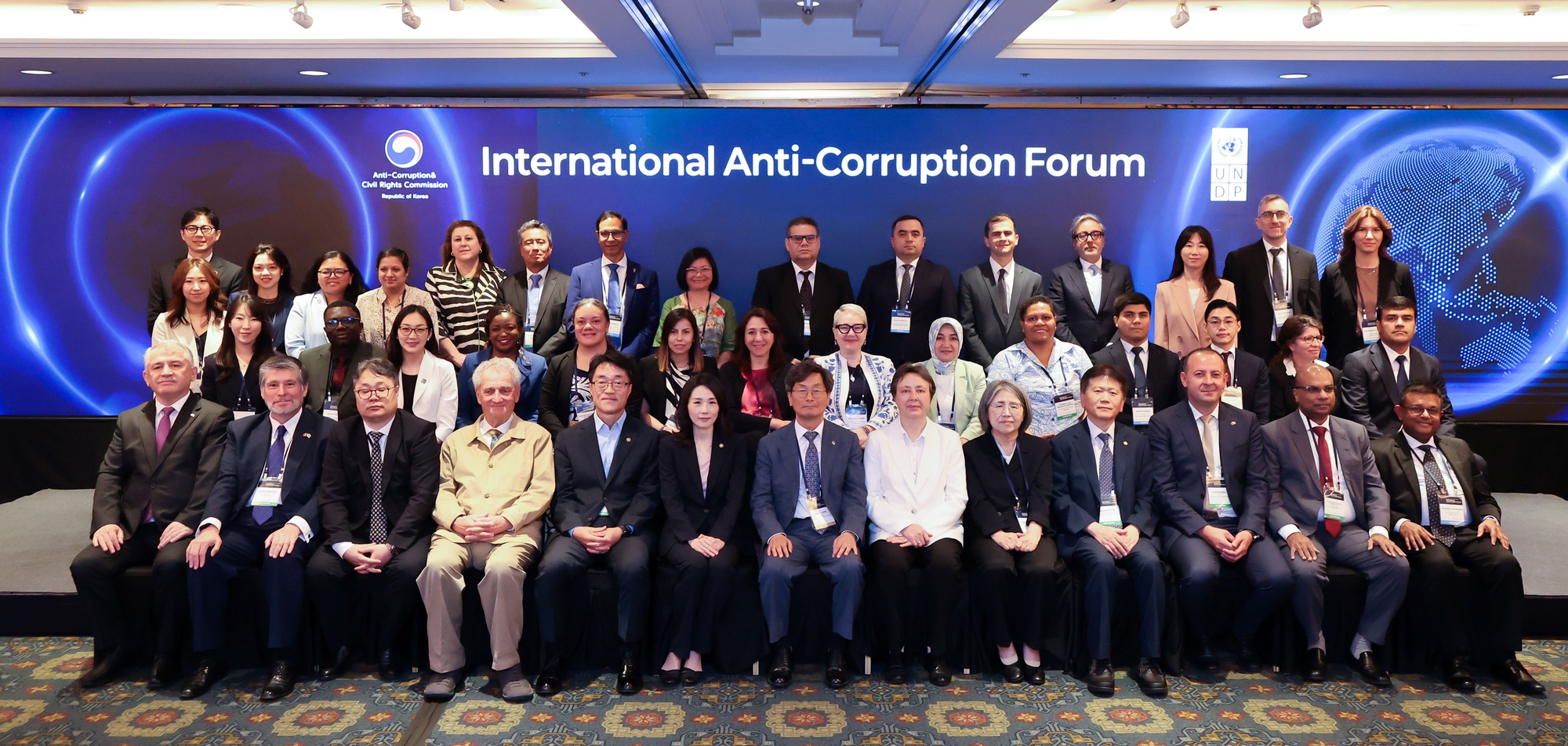
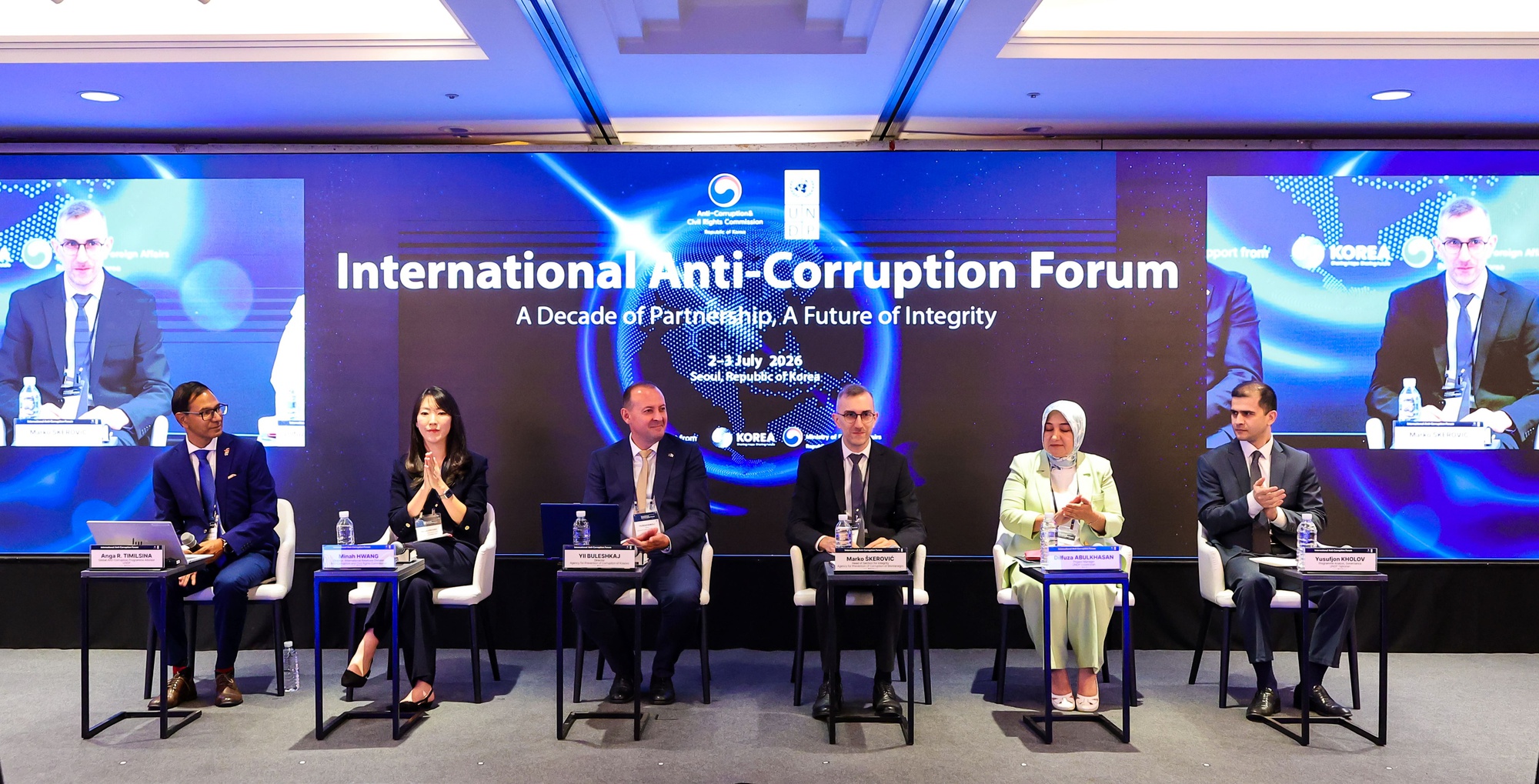
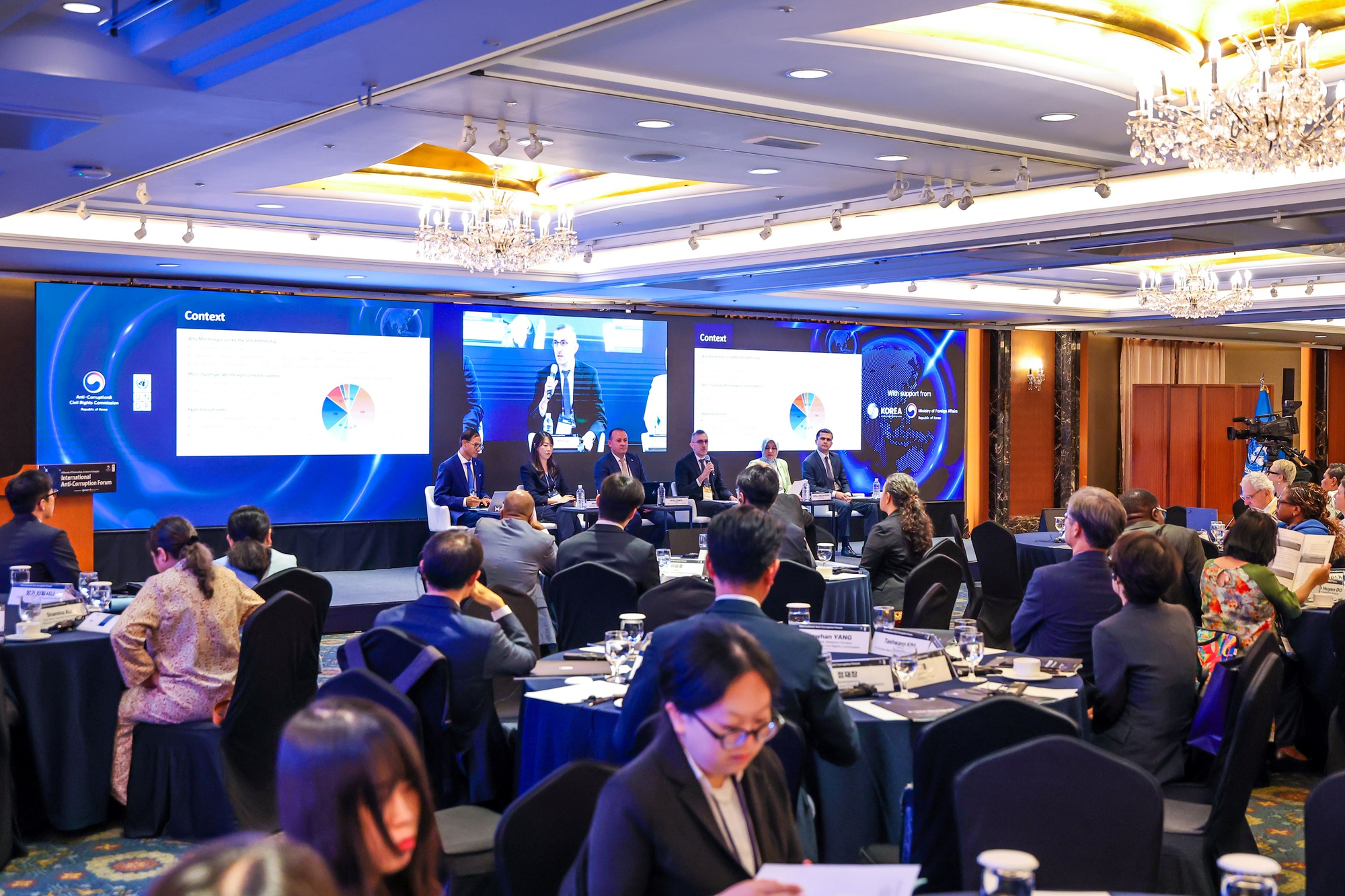
The Agency for Prevention of Corruption (APC) participated in the International Anti-Corruption Forum “A Decade of Partnership – The Future of Integrity,” held on 2 and 3 July in Seoul, Republic of Korea.
The Forum was organised by the Anti-Corruption and Civil Rights Commission of the Republic of Korea (ACRC) and the UNDP Seoul Policy Centre (USPC), with the support of the Ministry of Foreign Affairs of the Republic of Korea, to mark ten years of successful cooperation under the SDG Partnership Programme. The event brought together representatives of institutions, international organizations and experts from several countries to exchange experiences and present good practices in strengthening integrity, transparency and corruption prevention.
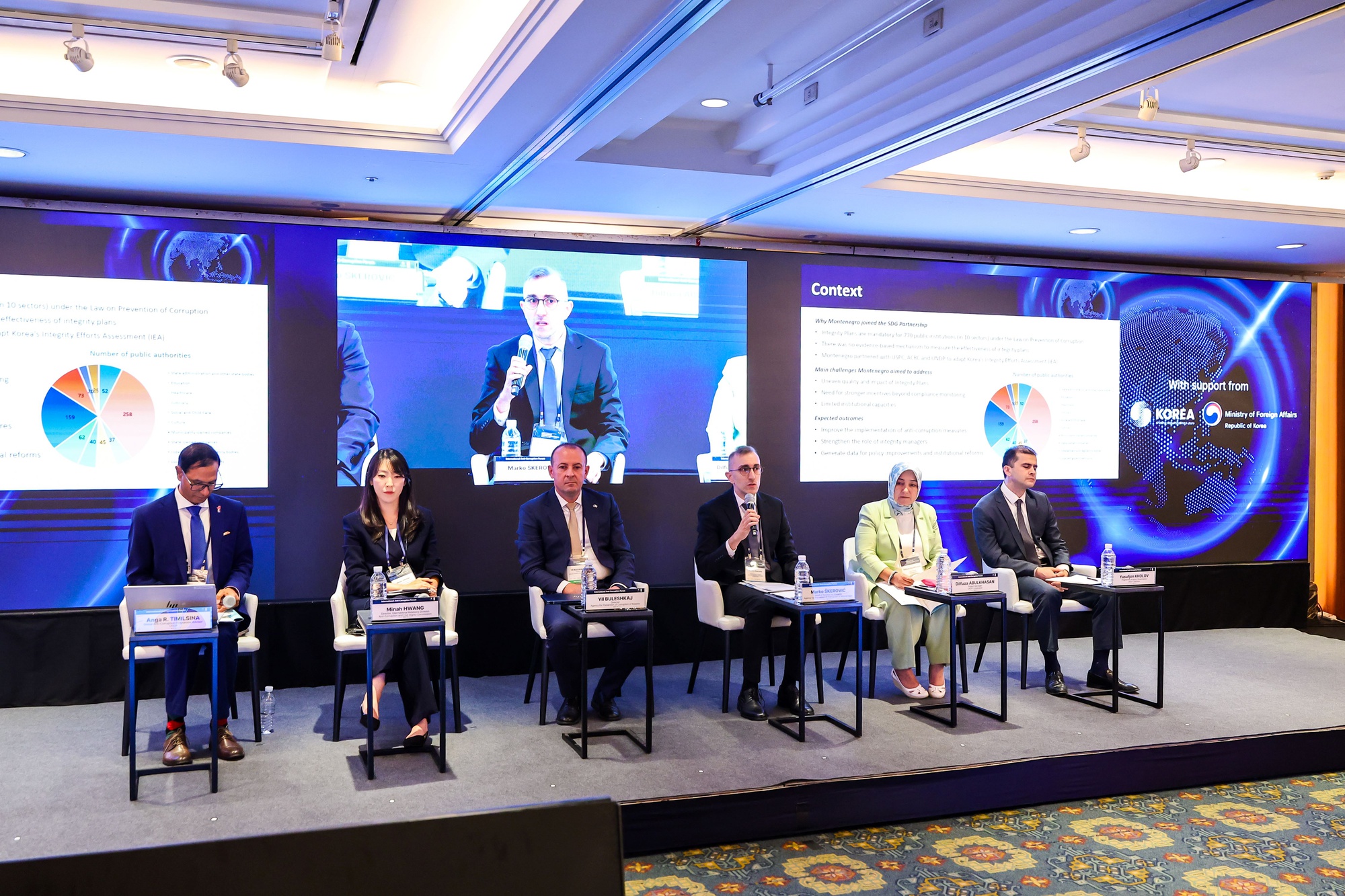
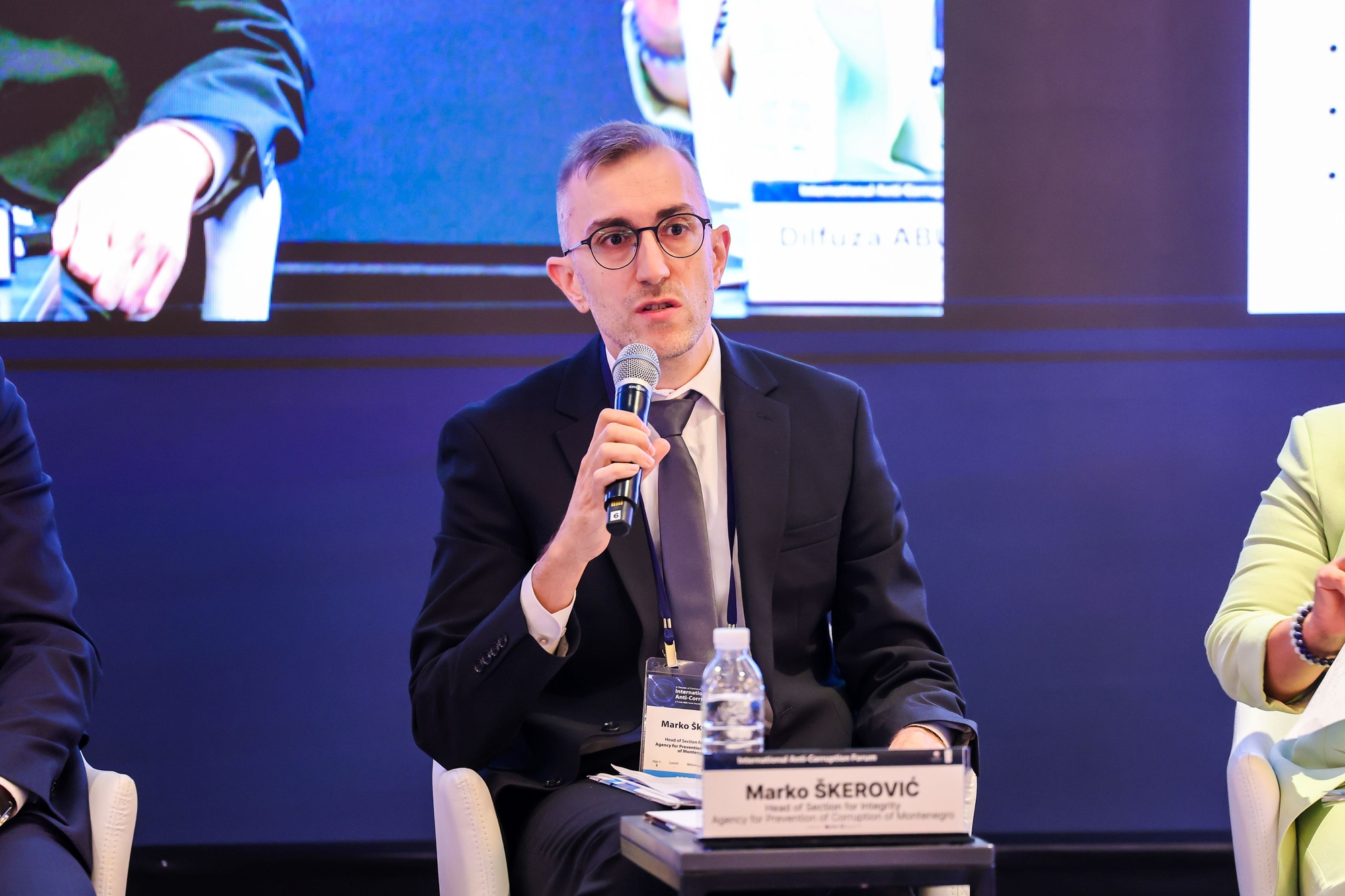
During the first thematic session, dedicated to achievements and lessons learned in the areas of integrity and the fight against corruption, Marko Škerović, Head of the Integrity Department at the Agency for Prevention of Corruption, presented Montenegro’s experience in developing and implementing the Methodology for Assessing the Implementation of Anti-Corruption Measures, developed in cooperation with the United Nations Development Programme (UNDP) in Montenegro, with the support of ACRC and USPC.
The presentation outlined how the Korean Integrity Efforts Assessment (IEA) model was adapted to Montenegro’s legal and institutional framework while preserving its key principles, including an evidence-based approach, measurable indicators and objective assessment. Particular emphasis was placed on the involvement of integrity managers in the development of the Methodology, a sector-based approach to assessment, public availability of results, and the use of positive incentives as a mechanism for strengthening institutional integrity.
The results of implementing the Methodology through the “Integrity in Action” initiative were also presented, including its integration into the Agency’s regular activities, the assessment of five public administration sectors, the establishment of a digital platform for the submission of evidence and reporting, and a mechanism for monitoring the implementation of recommendations. It was highlighted that the Methodology has contributed to improving internal procedures and anti-corruption practices within institutions, while also providing reliable data for the development and improvement of public policies in the field of anti-corruption.
Speaking about the sustainability of the project, it was emphasized that the implementation of the Methodology has been incorporated into the Action Plan for the Implementation of the Anti-Corruption Strategy for 2026–2027, thereby ensuring its continuity as part of the Agency’s regular activities. The Action Plan also envisages extending the assessment to companies majority-owned by the state, as well as systematically monitoring the implementation of recommendations from previous assessment cycles.
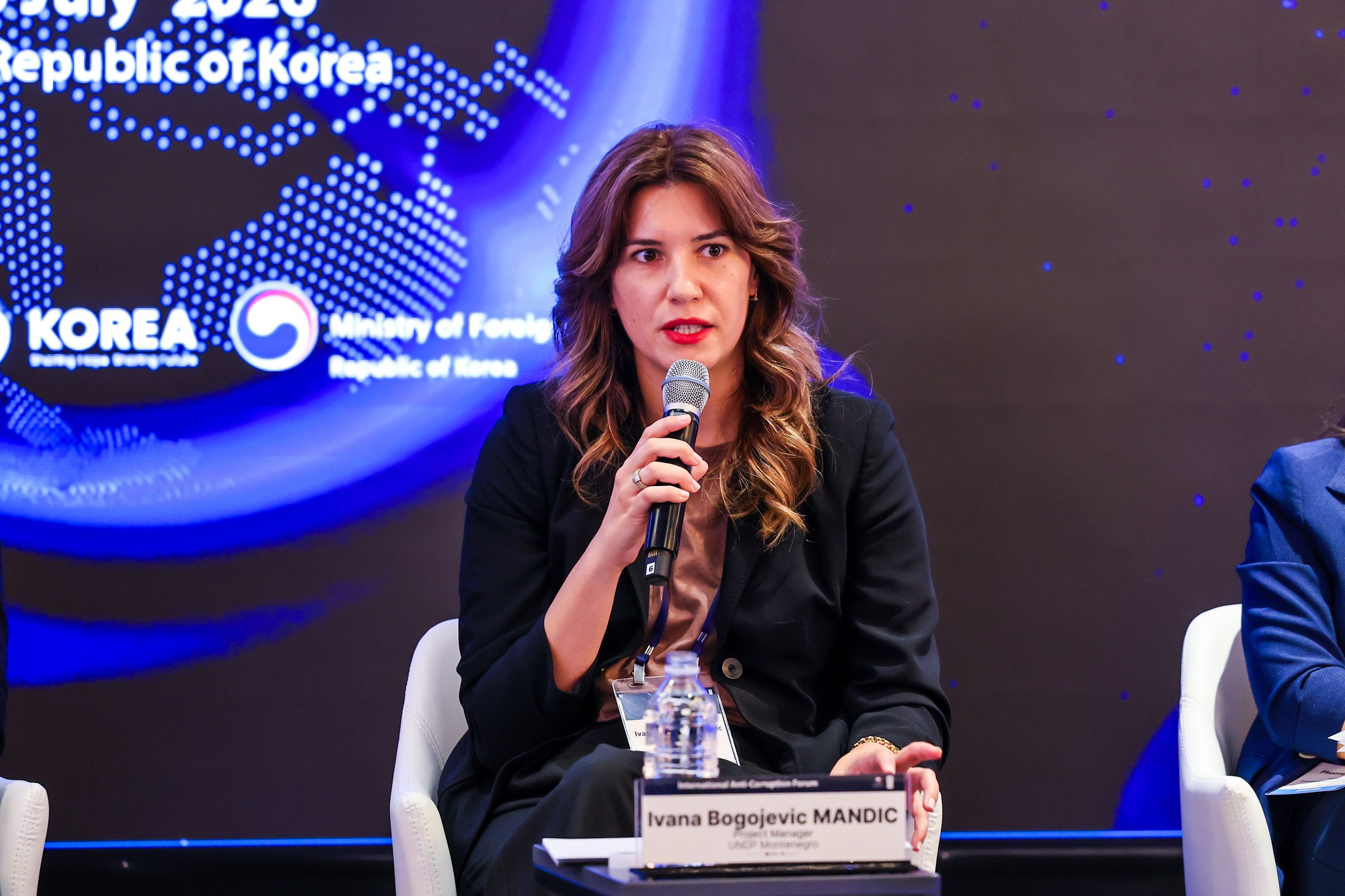
During the second thematic session, dedicated to translating the legal framework into sustainable institutional change, Ivana Bogojević Mandić, a representative of UNDP Montenegro, participated in a panel discussion and presented Montenegro’s experience in implementing reforms in the areas of integrity and corruption prevention.
The Forum also saw the presentation of the “Integrity Building Guide,” prepared by the Agency and UNDP as a practical handbook for countries interested in establishing similar integrity assessment systems. The publication systematizes the experience gained through the adaptation and implementation of the Korean model in Montenegro, with the aim of supporting other countries in developing their own mechanisms for strengthening public-sector integrity.
The Agency’s participation in this international forum confirms that the results achieved by Montenegro in developing and implementing the Methodology for Assessing the Implementation of Anti-Corruption Measures have been recognized at the international level. The Forum also provided an opportunity to exchange experiences with international partners and explore new opportunities for cooperation in the areas of digitalization, the application of artificial intelligence in corruption prevention, and further strengthening public-sector integrity.